Diabetes and Foot Problems: Protecting Your Feet Before Trouble Starts

Diabetes Foot Problems: Warning Signs, Prevention

August 16, 2026

Translated By
Marcos Otero
Reviewed By
Marcos Otero
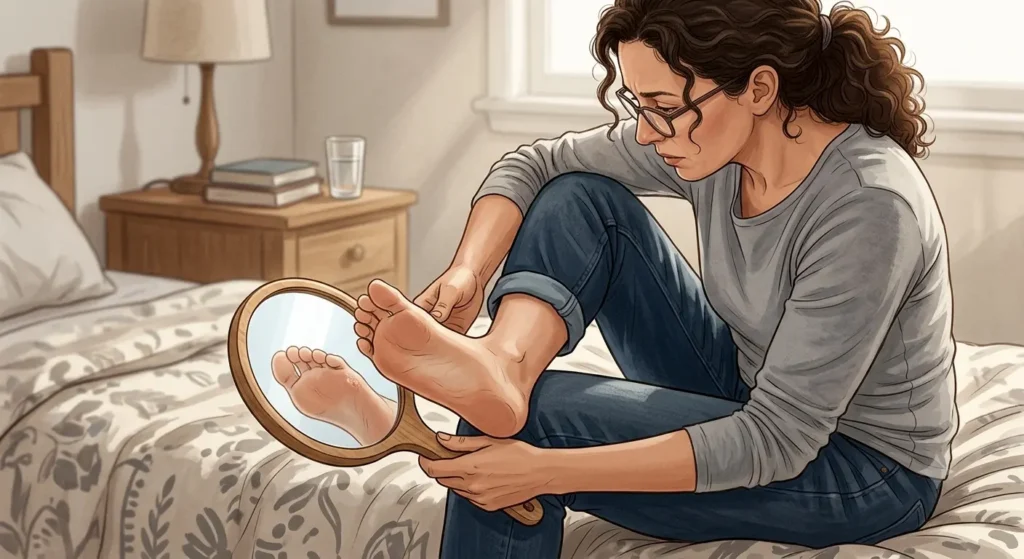
Women checking for diabetic foot, neuropathy,

What It Is?

“El pie diabético” no es una sola enfermedad. Es un grupo de problemas que pueden aparecer cuando la diabetes afecta los nervios, la circulación, la piel, los huesos y la capacidad del cuerpo para combatir infecciones.

Dos problemas principales suelen estar presentes:

Neuropatía significa daño de los nervios. Puede causar ardor, hormigueo, punzadas, dolor como corriente eléctrica, adormecimiento o pérdida de sensibilidad. Una persona puede pisar algo afilado, desarrollar una ampolla o quemarse sin darse cuenta.

Enfermedad arterial periférica, o EAP, significa estrechamiento de los vasos sanguíneos en las piernas y los pies. La mala circulación dificulta que llegue sangre con oxígeno a los tejidos. Cuando el flujo de sangre es bajo, las heridas sanan lentamente y aumenta el riesgo de infección.

Cuando la neuropatía y la mala circulación trabajan juntas, forman un equipo peligroso. Una oculta la lesión; la otra dificulta la curación.

Why the Diagnosis Is Sometimes Missed

Diabetic foot problems are often missed because they can begin quietly.

A person may feel fine and assume everything is under control. Unfortunately, diabetes can damage nerves and blood vessels long before symptoms become obvious. Some people have numbness instead of pain. Others have pain only when walking. Some notice cold feet, shiny skin, hair loss on the legs, thick toenails, or slow-healing cuts but do not connect those signs to circulation problems.

Pain can also be misleading. A person with neuropathy may have a serious wound and very little pain. Another person may have burning pain even when the skin looks normal.

There is another reason problems are missed: feet are easy to ignore. They are far away, usually covered, and not exactly the first body part we show off at family gatherings. But with diabetes, “out of sight, out of mind” can become “out of sight, in trouble.”

Patient Story

Ignacio’s Cold painful foot

Ignacio was 62 years old and had lived with diabetes for more than thirty years. Like many people, he took his medicines sometimes, skipped them at other times, and judged his health by how he felt that day.

Then his left foot became cold. At first, he thought it was nothing. Later, walking became painful. His daughter noticed that he looked older and more tired than he should. She also noticed that his foot felt ice cold.

When Ignacio was examined, the foot looked bluish, the pulses were very weak, the skin on his lower legs was shiny and thin, and there was hair loss on the legs. His toenails were thick and brittle. These were warning signs of severe circulation disease.

Ignacio’s story is not included to frighten people. It is included because it teaches an important lesson: diabetes can do damage quietly for years, then suddenly show itself in a way that cannot be ignored.

Symptoms

Diabetic foot problems can cause many different symptoms.

Nerve symptoms may include burning, tingling, pins and needles, electric-shock sensations, numbness, or unusual sensitivity to touch. Some people feel as if their socks are bunched up even when they are not wearing socks. Others describe walking on cotton, sand, or pebbles.

Poor circulation may cause cold feet, pale or bluish color, leg pain when walking, cramps in the calves or thighs, slow-healing wounds, shiny skin, hair loss on the legs, thick toenails, or weak pulses.

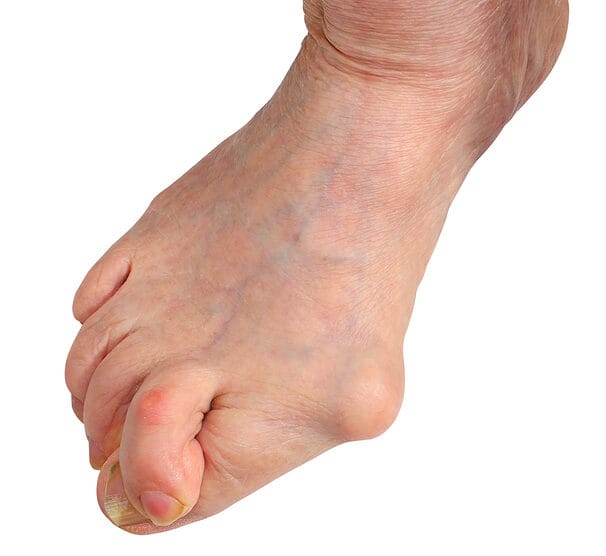
Skin and nail symptoms may include dryness, cracks, calluses, corns, blisters, ingrown toenails, fungal nail changes, redness, swelling, drainage, or ulcers.

Pain by location can also give clues. Heel pain may come from plantar fasciitis, Achilles tendon problems, bursitis, fracture, or tendon rupture. Toe pain may come from gout, bunions, hammertoes, ingrown nails, or broken toes. Burning or electric pain may suggest nerve irritation or neuropathy.

Not every foot pain in a person with diabetes is caused by diabetes. People with diabetes can still get sprains, fractures, gout, bunions, plantar fasciitis, tendonitis, and arthritis. The key is not to guess when warning signs are present.

Risk Factors

Foot complications are more likely when diabetes has been present for many years or when blood glucose has often been above target. Other risks include smoking, high blood pressure, high cholesterol, kidney disease, obesity, poor vision, difficulty reaching the feet, previous foot ulcers, foot deformities, poor-fitting shoes, neuropathy, and peripheral artery disease.

A history of amputation or previous diabetic foot ulcer greatly increases future risk.

Social factors matter too. People may delay care because of cost, transportation, work schedules, lack of insurance, language barriers, or fear of bad news. Unfortunately, diabetic foot problems are not impressed by our schedules. They progress whether we are ready or not.

Red Flags / When to Seek Urgent Medical Care

Seek urgent medical care if you have diabetes and notice:
• A foot wound, ulcer, blister, or cut that is not healing
• Redness spreading around a wound
• Drainage, pus, bad odor, or increasing warmth
• Fever or chills with a foot problem
• A black, blue, pale, or cold toe or foot
• Sudden severe foot pain
• New numbness or weakness
• A foot that becomes red, hot, swollen, and possibly not very painful
• Inability to bear weight
• A puncture wound, especially through a shoe
• A rapidly worsening ingrown toenail or infection
A red, hot, swollen foot in someone with diabetes and neuropathy can be a warning sign of infection or Charcot foot, a serious condition where bones and joints become damaged. Do not keep walking on it while waiting for it to “calm down.”
Call 911 for signs of stroke, chest pain, severe shortness of breath, major trauma, or a foot injury with loss of circulation.

Complications

The complications of diabetic foot disease can be life-changing.
A small callus may hide a wound underneath. A blister may become an ulcer. An ulcer can become infected. Infection can spread into deeper tissue or bone. Poor circulation can prevent healing. In severe cases, tissue may die, leading to gangrene and possible amputation.
Diabetic foot problems are also a warning sign for overall health. PAD is not only a leg problem. It is a circulation problem that can be linked with higher risk of heart attack, stroke, and reduced life expectancy.
The foot may be the body part waving the red flag, but the whole person needs attention.

Prevention and Screening

Prevention starts at home.

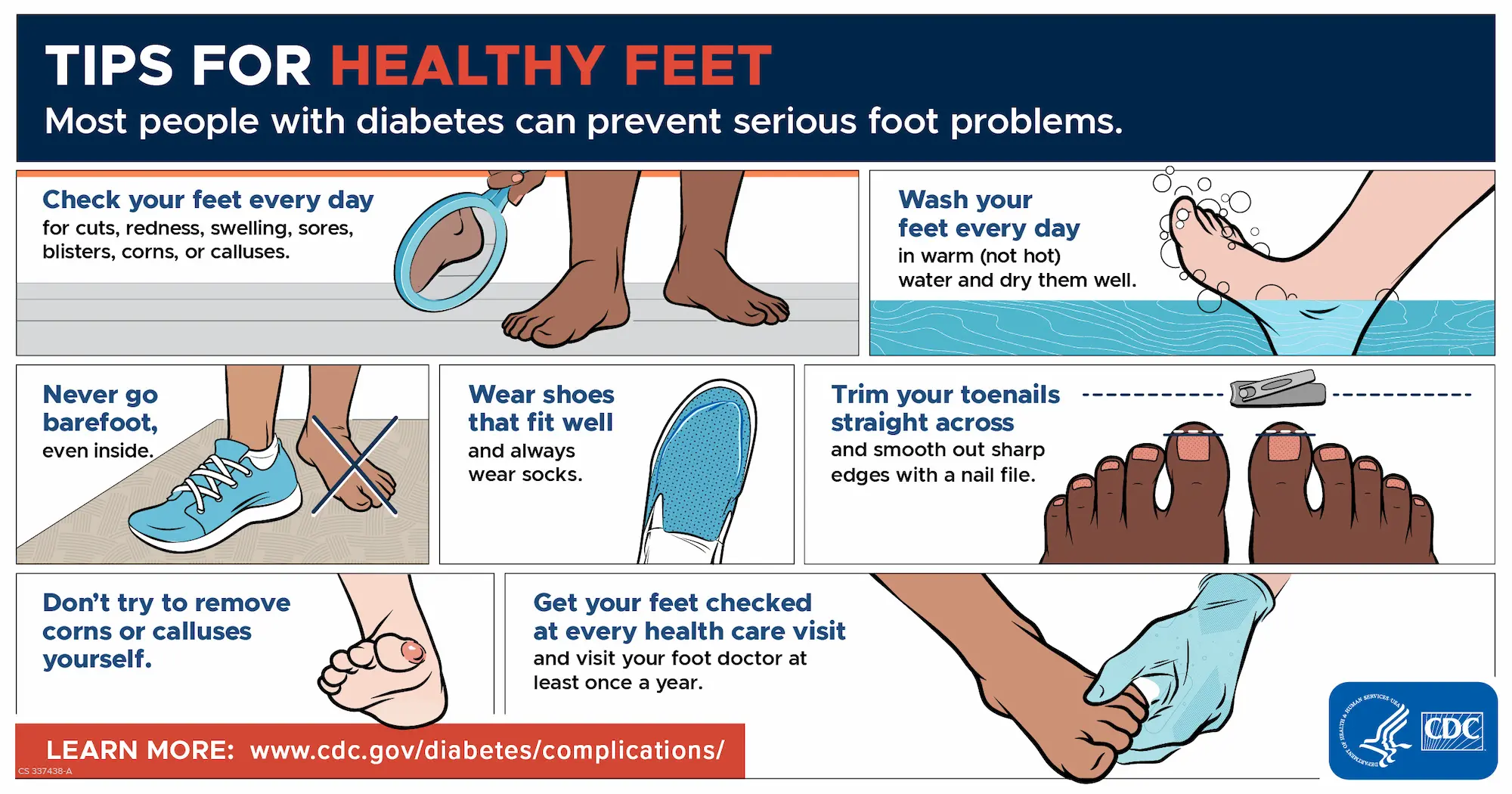
Check your feet every day. Look at the tops, bottoms, heels, between the toes, and around the nails. Use a mirror or ask for help if needed. Look for cuts, blisters, redness, swelling, calluses, cracks, drainage, color changes, or areas that feel warmer or colder than usual.

Wash your feet daily with warm—not hot—water. Dry well, especially between the toes. Moisturize dry skin, but avoid putting lotion between the toes because extra moisture there can encourage skin breakdown or infection.

Never walk barefoot, even indoors. A tiny object on the floor can become a big problem if you cannot feel it. Shake out shoes before wearing them. Choose shoes with enough room for the toes and no rough seams. Wear clean, dry socks.

Trim toenails straight across and smooth sharp edges. If you have thick nails, poor vision, poor circulation, neuropathy, or a history of ulcers, let a professional handle nail and callus care.

Ask for a foot check at every healthcare visit and a more complete foot exam at least yearly, or more often if you are high risk.

Treatment

Treatment depends on the problem.

For neuropathy, treatment may include better glucose management, evaluation for vitamin B12 deficiency or other causes, nerve-pain medications when appropriate, and foot-protection strategies. Pain medicines may reduce burning or stabbing sensations, but they do not bring back lost feeling. That is why daily inspection remains essential.

For poor circulation, treatment may include smoking cessation, cholesterol management, blood pressure control, diabetes management, antiplatelet therapy when appropriate, structured walking programs, and referral to vascular specialists when blood flow is severely reduced.

For wounds or ulcers, treatment may involve cleaning the wound, removing dead tissue, treating infection, keeping pressure off the area, special dressings, imaging when bone infection is suspected, and coordinated care with podiatry, wound care, primary care, endocrinology, infectious disease, or vascular specialists.

Do not cut calluses with blades, pop blisters, soak wounds without guidance, or use home remedies that burn the skin. The foot is not the place for kitchen chemistry.

Quick Checklist - What You Can Do Now

  1. Revise ambos pies todos los días.
  2. Informe adormecimiento, ardor, hormigueo, frialdad, heridas o cambios de color.
  3. Mantenga bajo cuidado regular la diabetes, la presión y el colesterol.
  4. Deje de fumar o pida ayuda para dejarlo.
  5. Use zapatos que ajusten bien.
  6. Nunca camine descalzo.
  7. Pida revisión de los pies en sus visitas médicas.
  8. Busque atención urgente por heridas, infección, dedos fríos o azules, hinchazón repentina o dolor intenso.
  9. Tome los medicamentos como fueron recetados, incluso cuando se sienta bien.
  10. Forme su equipo de cuidado antes de una crisis, no durante una.

Summary

Diabetic foot problems are serious, but they are not hopeless. The biggest danger is often delay. Diabetes can reduce feeling, damage circulation, slow healing, and make infection more dangerous. Ignacio’s story reminds us that feeling “okay” does not always mean the body is okay. Daily foot checks, regular medical care, proper shoes, glucose control, blood pressure and cholesterol management, and quick response to red flags can protect mobility and independence. Your feet carry you through life. With diabetes, they should not have to do it without supervision. Medical Disclaimer: This article is for general educational purposes only. It does not replace personal medical advice, diagnosis, or treatment from a qualified healthcare professional. If you have diabetes and notice a foot wound, infection, color change, sudden swelling, or severe pain, seek medical care promptly.

Action Checklist

  • Check both feet every day.
  • Use a mirror to see the soles.
  • Wash with warm, not hot, water.
  • Dry well between the toes.
  • Moisturize dry skin, but not between the toes.
  • Never walk barefoot.
  • Wear properly fitting shoes and clean socks.
  • Shake out shoes before wearing them.
  • Do not cut calluses or pop blisters.
  • Ask for foot checks at medical visits.
  • Seek urgent care for wounds, infection, cold blue toes, sudden swelling, or severe pain.

Medical Disclaimer

Medical Disclaimer – The content is for informational/educational purposes only, not professional medical advice, diagnosis, or treatment. Always remember to consult a doctor, never disregard professional advice, and no doctor-patient relationship is created.

Read our full Medical Disclaimer

Sources used for medical update

The CDC and NIDDK recommend daily foot inspection, proper shoes, regular foot checks, and prompt medical care for wounds, redness, swelling, sores, blisters, calluses, or other skin/nail changes in people with diabetes. (CDC)

The ADA Standards of Care contain current clinical practice recommendations, including diabetes complications such as retinopathy, neuropathy, and foot care. (Diabetes Professionals)

The 2024 ACC/AHA lower-extremity peripheral artery disease guidance emphasizes foot care, ulcer prevention, cardiovascular risk-factor management, smoking cessation, structured exercise, and coordinated care for patients with PAD, especially those with diabetes. (American College of Cardiology)