Measles Is Back: What the 2026 Outbreak Means for Your Family

Measles Is Back: What the Outbreak Means for Your Family

July 25, 2026

Translated By
Marcos Otero
Reviewed By
Marcos Otero
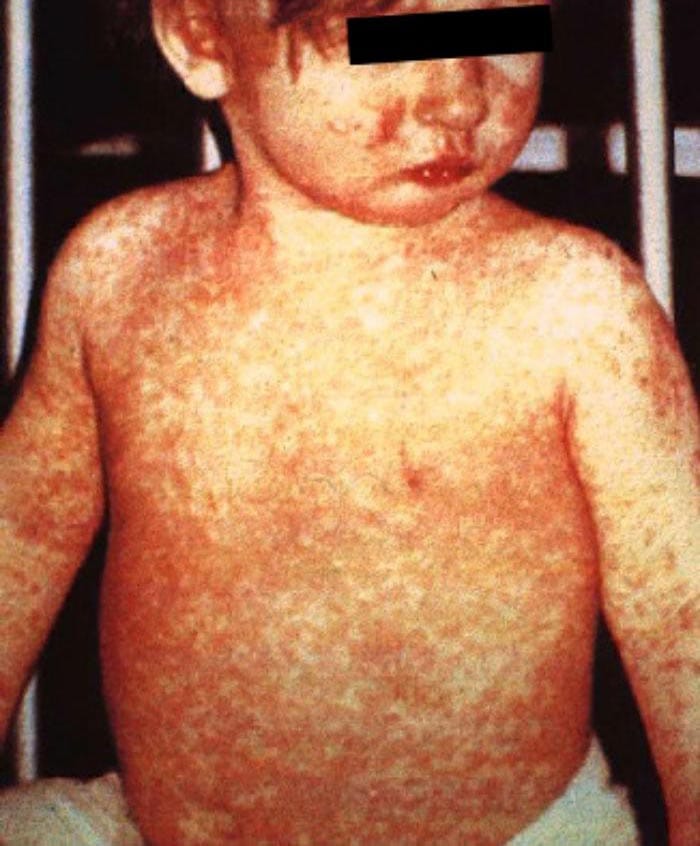
measles-infant trunk chest

Introduction

Measles is not an old-fashioned rash that somehow wandered out of a history book. It is a highly contagious respiratory infection caused by the measles virus, and it is back in a very modern way.

What It Is?

Measles is not an old-fashioned rash that somehow wandered out of a history book. It is a highly contagious respiratory infection caused by the measles virus, and it is back in a very modern way.

On July 24, 2026, the Centers for Disease Control and Prevention reported 2,318 confirmed U.S. measles cases through July 23. That was already more than the 2,289 cases reported during all of 2025. CDC also reported 35 new outbreaks in 2026, with 93% of confirmed cases connected to outbreaks. Florida was among the 45 U.S. jurisdictions reporting cases. These numbers are preliminary and can change as health departments investigate and reclassify reports.

The United States declared measles eliminated in 2000. “Eliminated” did not mean the virus vanished from the planet. It meant measles was no longer continuously spreading inside the country. Infected travelers can still bring it into the United States, and the virus can spread rapidly when it reaches a group with low vaccination coverage.

Measles spreads through the air when an infected person breathes, coughs, or sneezes. The virus may remain infectious in a room for up to two hours after that person has left. Among people without immunity, as many as nine out of ten who have close contact with a person with measles may become infected. Measles does not merely knock on the door; it can linger in the waiting room after it has gone.

The measles, mumps, and rubella vaccine—MMR—is the best protection. One dose is about 93% effective against measles, and two doses are about 97% effective.

Why the Diagnosis Is Sometimes Missed

Why the Diagnosis Is Sometimes Missed

Measles can be missed because it does not begin with its famous rash. The first phase looks like many ordinary respiratory infections: fever, cough, runny nose, fatigue, and red or watery eyes. Influenza, COVID-19, adenovirus, other viral illnesses, medication reactions, and several childhood rashes can initially look similar.

The rash usually appears three to five days after the first symptoms. By then, the person has already been contagious for several days. A patient may therefore visit a clinic, school office, pharmacy, or emergency department before anyone realizes measles is possible.

Many younger clinicians and parents have never seen a true measles case because vaccination made the disease uncommon for decades. The rash may also be harder to recognize on brown or Black skin, where it can look purple, brown, or darker than the surrounding skin rather than bright red. In people who have partial immunity, the illness may be milder or the rash may appear in an unusual pattern.

Finally, a diagnosis cannot safely rest on appearance alone. Suspected cases require rapid communication with public health officials and laboratory confirmation, usually with a respiratory swab for PCR and a blood test. Early or incomplete testing can sometimes be misleading, especially in a previously vaccinated patient.

Patient Story

Daniela / Short Patient Measle Story

Daniela, an energetic eight-year-old, returned from a family trip with a fever and cough. Her mother assumed she had picked up “the usual travel bug.” The next day Daniela’s eyes became red and watery, and her fever climbed above 103°F. On the fourth day, blotchy spots appeared near her hairline and began moving down her neck.

Her mother remembered seeing a measles alert and checked Daniela’s vaccine record. Daniela had received her first MMR dose as a toddler, but a move between states had interrupted routine care and the second dose was never documented.

Instead of walking into the pediatric office, her mother called first. The staff arranged an isolated evaluation and contacted the health department. Testing confirmed measles. Because the family called ahead, the clinic avoided exposing a waiting room filled with infants, pregnant patients, and children receiving cancer treatment.

Daniela recovered, but several relatives and travel contacts needed rapid review of their immunity. Some received MMR vaccine within the post-exposure window. Others required different medical guidance. The lesson was not that the family had failed; it was that one missing record, one delayed dose, and one very contagious virus can create a community emergency.

Symptoms

Symptoms usually begin 7 to 14 days after exposure, although the full interval from exposure to rash can range up to 21 days.

The early symptoms are often remembered as the “three C’s”:

  • Cough
  • Coryza, the medical word for a runny nose
  • Conjunctivitis, meaning red, watery eyes

A high fever and marked fatigue are common. The fever may rise above 104°F. Two or three days after symptoms begin, tiny white spots with bluish centers—called Koplik spots—may appear inside the cheeks. They are an important clue but may be brief or difficult to see.

The rash usually appears three to five days after the first symptoms. It often begins at the hairline or face, then spreads downward to the neck, trunk, arms, legs, and feet. Flat spots may merge, and small raised bumps may appear. The fever can spike again when the rash develops. On darker skin, color changes can be subtle; texture, spread, fever, and the other symptoms matter.

A person with measles is generally contagious from four days before the rash begins through four days after it begins. The day the rash starts is counted as day zero. People with weakened immune systems may remain contagious longer.

Risk Factors

Anyone without reliable immunity can get measles. Risk rises with:

  • No MMR vaccination or an incomplete vaccine series
  • Unknown or missing vaccine records
  • Close contact with a person who has measles
  • International travel, especially without checking vaccine status beforehand
  • Living, studying, worshiping, working, or gathering in a community with low vaccination coverage
  • Being too young for routine vaccination
  • Having a weakened immune system
  • Pregnancy without evidence of immunity
  • Working in healthcare, childcare, education, travel, or other settings with frequent public contact

The people most likely to develop severe complications include children younger than five, adults older than twenty, pregnant patients, and people with weakened immune systems. However, previously healthy children can also become seriously ill.

Red Flags / When to Seek Urgent Medical Care

Red Flags / When to Seek Urgent Medical Care
Call a healthcare professional immediately if you or your child has been exposed to measles or develops fever with cough, runny nose, red eyes, or a spreading rash. Call before entering a clinic or emergency department so staff can prevent exposure to other patients.
Seek emergency care for:
• Difficulty breathing, rapid breathing, bluish lips, or chest pain
• Severe dehydration: very little urine, dry mouth, no tears, unusual sleepiness, or inability to drink
• Confusion, extreme drowsiness, fainting, severe headache, stiff neck, or seizures
• A fever above 104°F that is persistent or accompanied by worsening illness
• A child who is difficult to wake, unusually limp, or not interacting normally
• Pregnancy with a suspected exposure or compatible symptoms
• Symptoms in an infant, a person with a weakened immune system, or anyone receiving chemotherapy, transplant medicines, or strong immune-suppressing treatment
Do not sit in a public waiting room while wondering whether the rash “looks measles enough.” Make the call first. That phone call is part of the treatment plan because it protects everyone else.
CALL BEFORE YOU ARRIVE
Possible measles? Do not walk into a crowded waiting room. Call the clinic or emergency department first so staff can arrange safe evaluation.

Complications

Measles can be mild in some people, but it is not predictably mild. About one in five unvaccinated people in the United States who develops measles is hospitalized. Ear infections occur in about one in ten children. As many as one in twenty children develops pneumonia, the leading cause of measles death in young children.
About one child in every 1,000 measles cases develops encephalitis, or swelling of the brain. Encephalitis can cause seizures and may lead to deafness, intellectual disability, or permanent brain injury. Roughly one to three of every 1,000 infected children may die from respiratory or neurologic complications.
Pregnancy can be complicated by premature delivery or low birth weight. Years after apparent recovery, a very rare but fatal brain disease called subacute sclerosing panencephalitis, or SSPE, can occur. Measles also weakens immune memory, leaving the body less prepared to fight some infections it previously recognized.
That is a long list for an illness sometimes dismissed as “a childhood rash.”

Prevention and Screening

Vaccination is the main prevention strategy.

Routine childhood schedule:

  • First MMR dose at 12 through 15 months
  • Second dose at 4 through 6 years

The second dose can be given earlier when needed, as long as the minimum interval is met. During outbreaks or before international travel, recommendations may change. Infants 6 through 11 months old who will travel internationally should receive an early MMR dose, but that early dose does not replace the two routine doses given after the first birthday.

Teens and adults should review whether they have evidence of immunity. Depending on age and risk, evidence may include written vaccine documentation, laboratory evidence of immunity, laboratory-confirmed prior measles, or birth before 1957. Healthcare workers and people in outbreak settings may need more specific guidance. A verbal “I think I had the shots” is not the same as a record.

MMR is a live vaccine. It is generally not given during pregnancy or to people with certain severe immune-suppressing conditions. Those patients need individualized medical advice. Most people who already have two documented MMR doses do not need an extra measles booster simply because cases are in the news.

The vaccine has expected side effects such as a sore arm, fever, or a mild temporary rash. Serious reactions are rare. The risk from measles is far greater than the risk from vaccination.

MMR BY THE NUMBERS

One dose is about 93% effective against measles. Two doses are about 97% effective. Most people with two documented doses do not need an extra measles booster.

After an Exposure: Time Matters

If an unprotected person is exposed, do not wait for symptoms. Contact a healthcare professional or the health department immediately.

MMR vaccine given within 72 hours of the initial exposure may prevent illness or make it milder in eligible people. Immune globulin may be recommended within six days for certain high-risk people, including some infants, pregnant patients without immunity, and severely immunocompromised patients.

The public health monitoring period may extend for 21 days after exposure because symptoms and rash can take that long to appear. That does not mean every exposed person is automatically isolated for 21 days. Exclusion, quarantine, testing, vaccination, immune globulin, and return-to-school or work decisions depend on immunity, timing, symptoms, setting, and health-department guidance.

EXPOSURE WINDOWS

MMR may help if given within 72 hours of exposure. Immune globulin may help certain high-risk people within 6 days. Public health monitoring may continue for 21 days.

Treatment

Treatment and the Vitamin A Question

There is no FDA-approved antiviral medication that routinely cures measles. Treatment is supportive: fluids, fever control, nutrition, oxygen when needed, and prompt treatment of complications such as pneumonia or secondary bacterial infection.

Vitamin A may be used for infants and children with confirmed measles under a healthcare professional’s supervision, especially in severe or hospitalized cases. Vitamin A does not prevent measles, does not replace MMR vaccination, and should not be taken in high doses “just in case.” Excess vitamin A can injure the liver, bones, skin, and nervous system and can cause birth defects during pregnancy. The supplement aisle is not an emergency department.

VITAMIN A IS NOT A VACCINE

Vitamin A may be used for children with confirmed measles under medical supervision. It does not prevent measles, replace MMR, or justify high-dose self-treatment.

Quick Checklist - What You Can Do Now

  1. Find the actual vaccine record for every child and adult in your household.
  2. Ask a healthcare professional whether each person has acceptable evidence of immunity.
  3. Catch up missing MMR doses. Do not restart the series if a dose was delayed; the next appropriate dose usually completes it.
  4. Before international travel, review measles protection at least several weeks ahead—and act sooner if travel is close.
  5. If exposed, call immediately because the 72-hour vaccine window and six-day immune-globulin window pass quickly.
  6. If symptoms appear, stay away from school, work, worship services, public transportation, and crowded settings until you receive instructions.
  7. Call before visiting a clinic or hospital.
  8. Protect people who cannot receive MMR by keeping community vaccination rates high.
  9. Recheck outbreak numbers just before publishing or sharing this article; they change weekly.

Summary

Measles is an airborne, vaccine-preventable infection—not merely a rash. The 2026 U.S. case count surpassed the entire 2025 total by July, and most cases were connected to outbreaks. The illness begins like a respiratory infection, spreads before the rash appears, and can cause pneumonia, brain swelling, hospitalization, permanent disability, or death. Two documented MMR doses provide excellent protection. When exposure occurs, rapid action can make a difference. Check records, call before seeking in-person care, and rely on your healthcare professional and public health department—not social media’s loudest cousin—for decisions about vaccination, testing, isolation, immune globulin, or vitamin A.

Action Checklist

☐ I located written MMR records for my household.

☐ I asked about missing or uncertain doses.

☐ I reviewed travel plans and outbreak notices.

☐ I know to call before entering a clinic with possible measles.

☐ I know the urgent warning signs.

☐ I understand that vitamin A is not a substitute for vaccination.

☐ I saved the contact information for my healthcare provider and local health department.

Medical Disclaimer

Medical Disclaimer – The content is for informational/educational purposes only, not professional medical advice, diagnosis, or treatment. Always remember to consult a doctor, never disregard professional advice, and no doctor-patient relationship is created.

Read our full Medical Disclaimer