Hurricanes, Inequality, and Neglect: The Challenge of Protecting the Latino Community
By Johani Carolina Ponce
Florida is home to approximately 6.4 million residents of Latino origin, according to the official Census website, equivalent to 27.4% of its total population of 23.7 million. Many live in areas particularly exposed to flooding or extreme winds, such as agricultural communities in the state’s interior or coastal areas with vulnerable infrastructure. The increasing intensity of hurricanes, as demonstrated by Hurricane Ian in 2022, with more than 150 deaths and $110 billion in damage, has made it clear that the impact is not only climatic, but also social.
This year, experts agree: the hurricane season will be more active than usual. The National Oceanic and Atmospheric Administration (NOAA) anticipates between 13 and 19 named storms, up to five of which could reach major category. Colorado State University (CSU) also predicts an intense season, with at least four major hurricanes.
The reason? The Atlantic Ocean is warmer than normal, and the ENSO phenomenon—El Niño Southern Oscillation—is in neutral phase, a condition that doesn’t slow cyclone formation and can amplify their effects when there is so much heat available at sea.
ENSO is a weather pattern that alters wind behavior and water temperatures in the Pacific, but its effects are felt worldwide. In El Niño years, fewer hurricanes typically form in the Atlantic; with La Niña, they increase. But in a neutral phase, like the current one, other factors, such as warm Atlantic waters, take on greater weight and increase the risk of a more dangerous season.
According to Reuters, this combination makes 2025 a year that demands maximum preparation, especially for groups that historically receive less support in the face of these disasters.
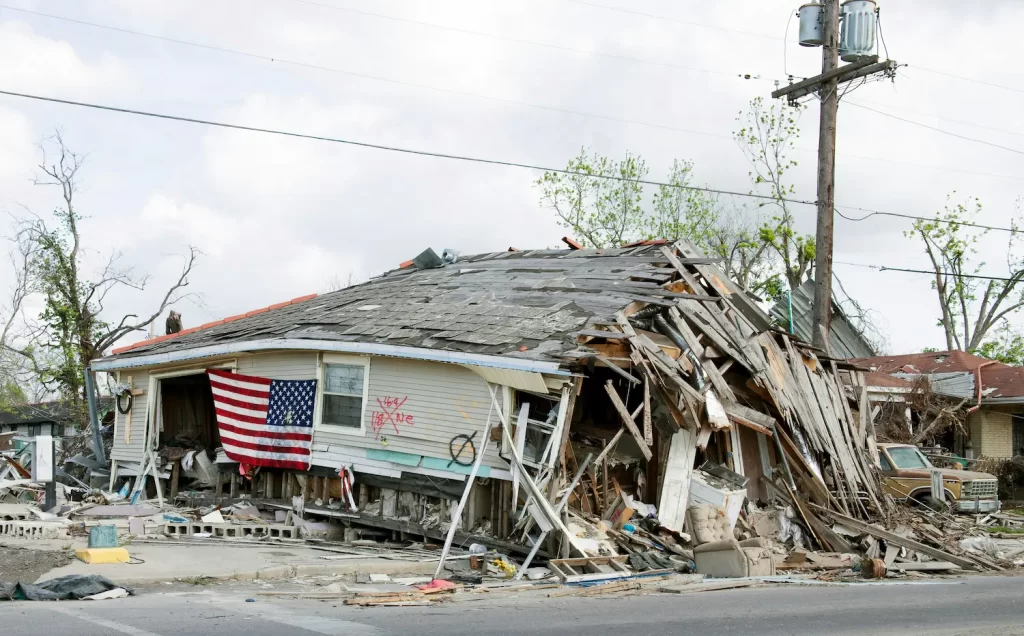
For many Latinos, this threat adds to a reality of constant vulnerability. In North Carolina, Ofelia Ortiz, a Mexican mother affected by Hurricane Helene, recalled the moment she had to evacuate: “We left with the clothes on our backs, without shoes. We lost everything, even the memories of my children.” Stories like Ortiz’s reflect how the impact of hurricanes is measured not only by the force of the wind, but also by the inequality with which their consequences are felt.
“Federal cuts to FEMA, the EPA, and the Weather Service directly weaken hurricane preparedness in Latino communities by eliminating resources for early warnings, emergency response, and pollution monitoring,” warned Dr. Julie A. González, an environmental justice expert. These cuts have restricted critical functions, from Spanish-language alerts to post-hurricane cleanup, affecting areas that have yet to recover from Hurricane Helene. Neglected Communities and Delayed Responses
Following Helene’s impact on North Carolina, González notes that “without timely assistance, many have spent months waiting for repairs to their homes, have lost days of work, and have had difficulty accessing medical care.” The lack of a federal response has forced community agencies and churches to take on a role that, without support, is unsustainable.
The increase in prices after a disaster directly impacts Latino families with precarious jobs. “They lose days of work, face unexpected expenses, and must repair their homes with very limited resources,” the researcher said. Added to this is the fear of deportation or immigration enforcement, which prevents many from applying for public assistance.
Beatriz Miguel de la Cruz, affected by Hurricane Helene in North Carolina, explained: “To receive aid, they ask me for papers that I no longer have. I lost everything in the storm.”
When Aid Becomes a Political Weapon
The politicization of aid further exacerbates the situation. “In 2025, we saw how the delivery of aid funds could be delayed or conditioned on political demands,” said González. This is nothing new: in past administrations, certain funds were frozen or conditioned on partisan requirements, delaying recovery and harming the most vulnerable the most. “Those with the least power suffer the most, while disaster aid becomes a bargaining chip rather than a guarantee,” González concludes.
For the expert, it is urgent that disaster response be “fair, swift, and truly accessible to all communities, regardless of immigration status or where they live.” But, she warns, it cannot depend solely on Washington. “Our strength lies in organizing, demanding action, and ensuring that no one is left behind.” Preparation must begin before the storm hits, combining political will, local organization, and strong community systems. With a busier season on the horizon and historically marginalized Latinx communities, it becomes essential to ensure equitable responses, eliminate structural barriers, and strengthen local networks. Climate justice is not just an academic goal; it is a social urgency: protecting those most at risk without turning aid into political currency. As González aptly summarizes, collective strength can, and must, make a difference.