
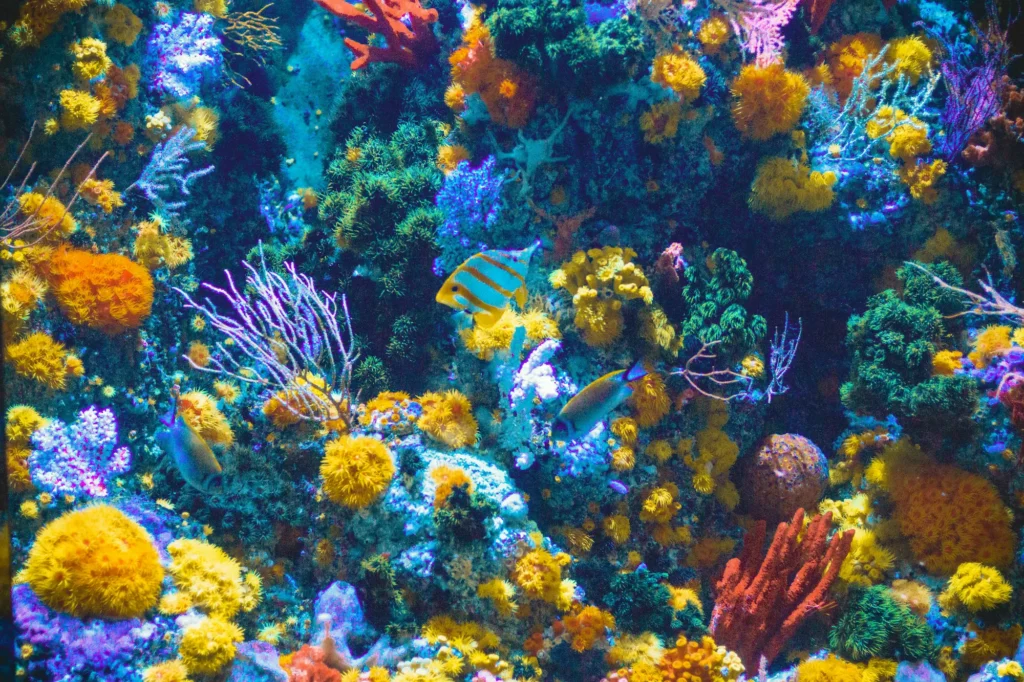
Coral reefs under the protection of scientific evidence and Indigenous knowledge
The National Oceanic and Atmospheric Administration (NOAA) has unveiled its comprehensive plan to protect coral reefs in the United States through 2040. The goal is to safeguard these vital ecosystems from threats such as pollution and climate change.
Unveiled last June, the *National Coral Reef Resilience Strategy* prioritizes habitat restoration, sustainable fishing, and the strengthening of local technical capacity. The initiative aims to serve as a model for action to ensure the preservation of marine biodiversity for future generations.
The document highlights that reefs are essential economic engines that support tourism, protect coastlines, and drive medical advancements. Through an adaptive management approach, the plan seeks to foster cooperation among government entities, Indigenous communities, and the private sector.
What are the plan’s key features?
In this 15-year plan, NOAA proposes ecosystem management and protection rooted in resilience, drawing upon the knowledge of local Indigenous communities, scientific evidence, community engagement, and governance.
The central objective is to optimize the reefs’ ability to withstand and recover from natural and human-induced disturbances.
The plan is structured around five key pillars with specific objectives:
• Studying the impacts of rising temperatures and changes in ocean chemistry—specifically acidification—using scientific models and forecasts.
• Identifying and prioritizing actions to mitigate local stressors—such as land-based pollution and fishing impacts—that weaken the corals’ natural resilience.
• Developing institutional and technical capacities, as well as strengthening public support for effective conservation actions.
• Fostering the participation of partners, local communities, and Indigenous peoples to raise awareness about climate impacts and co-design management strategies.
• Identifying the actions and investments needed to sustainably increase resilience in the face of multiple stressors.
The integration of Indigenous and traditional knowledge is a… …a fundamental pillar of the National Coral Reef Resilience Strategy 2025–2040, serving as an essential component for decision-making. NOAA worked directly with native communities to develop the project.
What is the importance of the plan?
Coral reef conservation translates into economic benefits for coastal communities: reefs generate billions of dollars in revenue and mitigate wave energy, storm impacts, and flooding. Furthermore, they are a vital source for drug development and contribute to marine diversity.
According to estimates in the NOAA report, tourism and recreation linked to these ecosystems generate more than 70,000 jobs in Southeast Florida alone. Combined, tourism and commercial fishing contribute approximately $1.04 billion to the national economy.