That Twisted Ankle: Sprain, Fracture, or Something More?

Sprain, Fracture, or Something More?

July 7, 2026

Translated By
Marcos Otero
Reviewed By
Marcos Otero
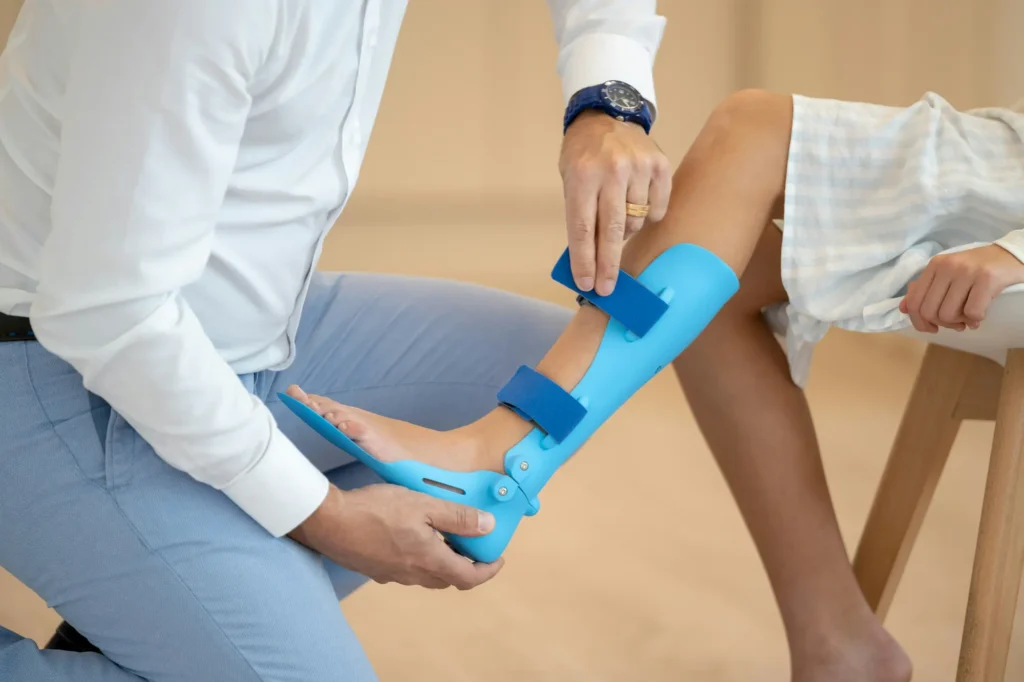
A person fits a blue orthopedic leg brace onto a child's lower leg and foot, securing it with blue straps—providing support after an ankle sprain. The child is seated, wearing a light, striped garment.

That Twisted Ankle: Sprain, Fracture, or Something More?

Introduction

What It Is?

Un esguince ocurre cuando los ligamentos que estabilizan el tobillo se estiran o se desgarran, cuando el pie se dobla hacia adentro. Una distensión afecta un músculo o tendón. Una fractura significa que uno o más huesos se han roto. Las tres lesiones pueden causar dolor, hinchazón, moretones y dificultad para caminar. Por eso, “todavía lo puedo mover” no es una prueba confiable.

La mayoría de los esguinces leves mejora con cuidado y rehabilitación; los graves y las posibles fracturas requieren evaluación.

Why It Is Often Missed

Why the Diagnosis Is Sometimes Missed

Ankle injuries are often underestimated because people expect a broken bone to cause unbearable pain or make walking impossible. In reality, some people can walk on certain fractures, while a severe sprain may make weight-bearing nearly impossible.

Swelling can hide the exact location of pain. The injury may be above the ankle, in the Achilles tendon, or through the middle of the foot. Adrenaline may reduce pain at first, and bruising may appear later.

Another reason injuries are missed is that improvement in pain does not always mean the ankle has regained stability. Without rehabilitation, the joint may remain weak, stiff, or poorly balanced, increasing the chance of another sprain.

Risk Factors

A previous ankle sprain is one of the strongest risk factors for another. Other risks include poor balance, weak ankle or leg muscles, limited ankle motion, uneven terrain, sudden changes in training, fatigue, and sports involving jumping or quick direction changes.

Worn-out or poorly fitting footwear can add risk. Neuropathy, osteoporosis, arthritis, and balance problems may also complicate injuries.

Symptoms

Common symptoms include pain, swelling, tenderness, bruising, stiffness, and difficulty bearing weight. Some people feel or hear a pop at the time of injury. A severe sprain may cause a sense that the ankle is unstable or “giving way.”

Pain directly over a bone may raise concern for a fracture. Pain above the ankle can occur with a “high ankle sprain,” which often heals more slowly. Pain and bruising through the middle of the foot, especially on the sole, may signal a more serious midfoot injury.

Whether an X-ray is needed depends on the injury pattern, examination, and ability to bear weight—not wishful thinking.

Prevention and Screening

For the first day or two, protect the ankle and use relative rest. A cold pack wrapped in cloth may help pain and swelling; use it for short periods rather than placing ice directly on the skin. Compression can help, but the wrap should not cause numbness, color change, or increased pain. Elevating the ankle above heart level may reduce swelling.

Pain relievers are not safe for everyone. Ask a healthcare professional if you have kidney, liver, heart, blood-pressure, ulcer, bleeding, or medication concerns.

Prolonged complete rest is rarely the finish line. Depending on injury severity, gradual weight-bearing, gentle motion, strengthening, and balance exercises help restore function. A brace or supervised physical therapy may be recommended. Returning to sports should depend on motion, strength, balance, and activity tolerance—not simply the calendar.

To lower future risk, strengthen the lower legs, practice balance, warm up, increase activity gradually, and wear appropriate footwear. An ankle brace may help some people during higher-risk activities, especially after a previous sprain.

Patient Story

"My ankle hurts and swelling!"

Elena, 47, stepped into a shallow hole while carrying groceries. Her ankle rolled, but she could limp into the house, so she assumed it was minor. She applied ice and went to work the next morning. By afternoon, the swelling had doubled, bruising had spread into her foot, and she could barely take four steps.

An examination and X-rays showed a small fracture near the ankle. Elena did not ignore the injury because she was careless; she simply believed that walking meant nothing was broken. Her story is a useful reminder: function matters, but it does not tell the whole story.

What You Can Do Now

Quick Checklist

Medical Disclaimer

Medical Disclaimer – The content is for informational/educational purposes only, not professional medical advice, diagnosis, or treatment. Always remember to consult a doctor, never disregard professional advice, and no doctor-patient relationship is created.

Read our full Medical Disclaimer