Latino Leaders Call for Climate Action in New York
By Johani Carolina Ponce
During Climate Week New York, prominent voices from the climate, business, and philanthropic sectors agreed that collective action and innovation are critical to sustaining progress in the fight against climate change. However, the current climate in the United States, dominated by measures favoring the fossil fuel industry, threatens to reverse recent gains and increase the cost of living for millions of families, particularly Latino families. An analysis published by Inside Climate News warns that rollbacks in clean energy policies could cost the economy more than $1.1 trillion by 2035.
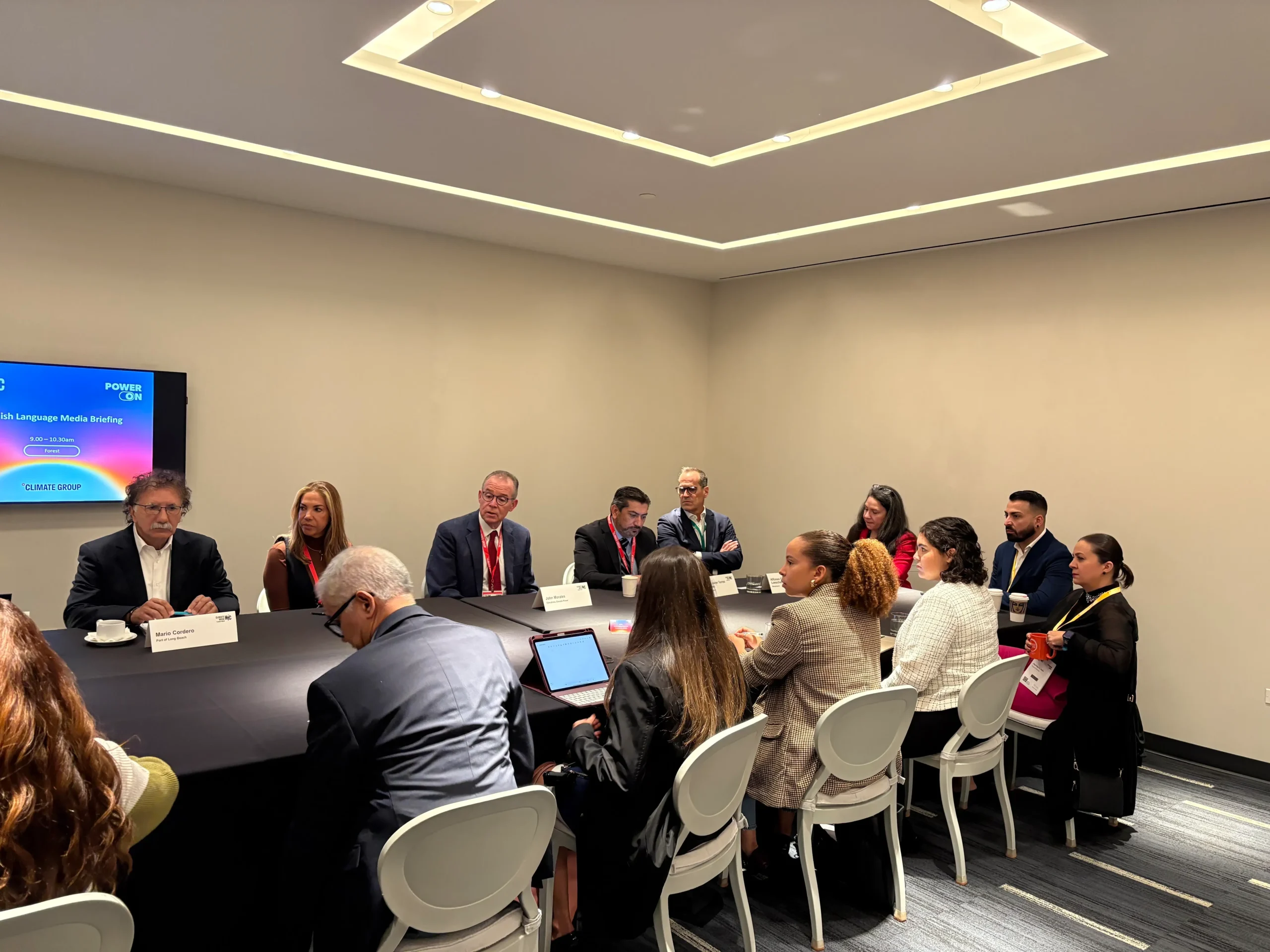
The event, “Climate Crossroads: Impacts and Action,” brought together leaders from diverse fields: Antonieta Cádiz, executive director of Climate Power En Acción; Thais López Vogel, CEO of the VoLo Foundation; Mario Cordero, CEO of the Port of Long Beach; John Morales, founder of ClimaData; Angela Barranco, executive director of Climate Group North America; Ricardo Javier Torres Hernández, Deputy Secretary of Environment of Querétaro, Mexico; and Alfonso González Loeschen, General Manager of Nespresso North America.
“The Latino leaders we gathered today from the business, government, and philanthropic sectors are at the forefront of sustainable solutions. We heard loud and clear that implementation is key and that the momentum is strong,” said Angela Barranco. “We can choose a path forward that includes prosperity, resilient communities, and innovative solutions.”
For Antonieta Cádiz, Latino participation is essential in the energy transition: “Latino communities not only face some of the worst impacts of climate change, but we are also leading the way with innovative solutions in clean energy and environmental justice. Our commitment is clear: our voices must guide decisions toward a more just and sustainable future, while creating real economic opportunities for our families.”
Setback in Federal Policies
The context in Washington marked part of the discussions. In July, the passage of the One Big Beautiful Bill Act, or Republican Tax Act, eliminated key incentives for clean energy. According to a new report by Climate Power, this measure skyrocketed utility costs, closed factories, and increased dependence on foreign oil.
“Trump promised lower bills and more jobs, and Americans are seeing the exact opposite,” said Lori Lodes, executive director of Climate Power. “Trump is undermining American jobs, raising energy bills, and destabilizing the electric grid by eliminating the cheapest and fastest energy sources available.”
The data is overwhelming: household electric bills have risen 10% since January, affecting more than 80 million electric customers and 28 million gas customers in 41 states. At the same time, more than 80,500 energy jobs have been eliminated or delayed, with 142 projects canceled or suspended in 37 states.
The burden falls most heavily on Latino communities, which already face an energy burden 24% higher than the national average. “Trump’s reckless policies only make life more expensive for Americans, while his wealthy donors rake in billions of dollars,” warned Elice Rojas-Cruz, CEO of Climate Power En Acción. “A 10% increase in electricity prices is just the beginning. Add to that job losses and a stagnant economy, and the consequences for Latinos’ finances and for meeting our national energy needs could be drastic.”
Science, Innovation, and Philanthropy
Faced with political setbacks, leaders in New York insisted on strengthening efforts from philanthropy, technological innovation, and the private sector. “We believe in practical and measurable solutions based on scientific data,” said Thais López Vogel, who called for depoliticizing climate action and supporting vulnerable communities, especially in states like Florida.
Mario Cordero highlighted the need for federal funding to accelerate the transition to zero-emission port operations: “Federal funding is critical to developing new clean energy technologies and achieving zero-emission operations.”
In Mexico, Querétaro has set a goal of reducing its emissions by 25% by 2030. “Private investment has played a central role, but recent changes have shifted more control to the state, providing clarity and strategic direction,” explained Ricardo Javier Torres Hernández.
Leadership at Stake
For John Morales, the United States’ challenge is to maintain global leadership: “The world looks to the United States as a leader. The 2015 Paris Agreement was possible because the U.S. was at the table.” However, he warned that the loss of leadership could cede ground to other nations in the energy transition.
While the political debate continues, the message from New York was clear: climate action cannot wait.