The War on Self: From Pearl Harbor to the Prediction Machine
By Deborah DeSilets
On December 7, 1941, Doris Miller manned an anti-aircraft gun aboard the USS West Virginia, fighting a tangible enemy. The fascism of Mussolini and Hitler was loud; it declared itself with steel, torpedoes, and shouting dictators who demanded hierarchy and obedience. They sought to organize society into a ruthless machine, stripping away the “inefficiency” of democracy. Today, the West faces a new, quieter authoritarianism. It is not managed by state dictators in uniforms, but by the “Five Tech Companies” attempting to lead America. The steel pact has been replaced by the silicon stack, and the war is no longer for land, but for our neurons.
Heather Cox Richardson describes a historical fight for equality against a system that sorted people into “leaders” and “servants.” Today, the “war against equality” is happening again, but the lines are drawn by algorithms. The social fabric, once broken by the segregation Miller fought against, is now broken by the very internet promised to connect us. This digital fabric mirrors the bias and authoritarian structures of the past by curating our lives in pictures, creating a “fishbowl” existence where perception is managed not by propaganda ministries, but by the dopamine loops of our own devices.
The modern AI leaders act as the new architects of a corrupted free market. Mussolini dreamed of a command economy where businessmen and politicians worked as one; today, “prediction machines” have achieved a level of control Mussolini could only dream of. Our choices are no longer truly free; they are wired into each keystroke. We are distracted to purchase, nudged to vote, and herded into tribes. TikTok is not just an app; it is a geopolitical force capable of “winning elections” by exploiting the cracks in our psychological defenses.
This is the “War on Self” that Bob Dylan prophesied when he went electric in 1965—a rebellion against the static expectations of the audience. Now, that war is fully aligned with social media in “The Stack.” We are no longer individuals; we are “divided souls,” fractured into data points to be sold to the highest bidder. The “Savannah brain”—our biological hardware evolved for the open plains and simple survival—cannot handle the interface of distraction we now inhabit. We are overwhelmed, over-stimulated, and easily manipulated.
The danger is distinct from the physical hunger experienced by the subjects of 20th-century fascism. Our threat is the “easy life” that Plato warned against. We have surrendered our cognitive maps to easy GPS and our critical thinking to easy answers. This ease causes a “sieve mind” (a swift, shallow cognitive drift) where we lose the ability to navigate reality without digital assistance.
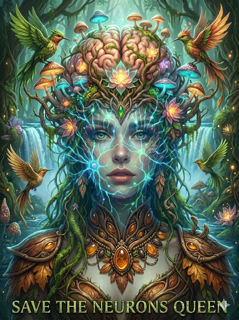
While Miller and the Allies fought to stop a world where “some were born to lead and others to serve,” we are drifting into a world where AI leads and humans serve as the data source. The tyranny of the 20th century used fear; the tyranny of the 21st century uses convenience. To preserve the democracy that the heroes of WWII saved, we must acknowledge that the battlefield has shifted. We must fight to “save our neurons” from a corrupted marketplace that views human attention as a resource to be mined. If we do not, we risk becoming exactly what the fascists desired: an efficient, unquestioning, organized machine, stripped of the messy, beautiful independence of the human soul. Feed your mind through your senses not ine finger tap aline: smell a flower, plant a tree, run through the bushes. Celebrate the cerebellum!