

When Your Gut Has a Mind of Its Own
Understanding IBS symptoms, triggers, and how to take control—without letting your stomach run the show.
Let’s be honest—your stomach has probably betrayed you at the worst possible moment. A meeting. A road trip. That one restaurant with no nearby bathroom.
If this sounds familiar, you’re not alone. Millions live with Irritable Bowel Syndrome (IBS)—a condition that doesn’t show up on scans but definitely shows up in your daily life.
What is IBS?
Irritable Bowel Syndrome (IBS) is a chronic digestive disorder that affects how the intestines function.
It’s a functional disorder, meaning everything may look normal—but it doesn’t behave normally.
Why It’s Often Missed
IBS doesn’t come with dramatic lab results. No tumor. No infection. No clear “smoking gun.”
So patients hear things like:
- “Everything looks normal”
- “It’s probably stress”
- “Try to relax”
Here’s the truth:
? IBS is real. And it can seriously affect quality of life.
Common Symptoms
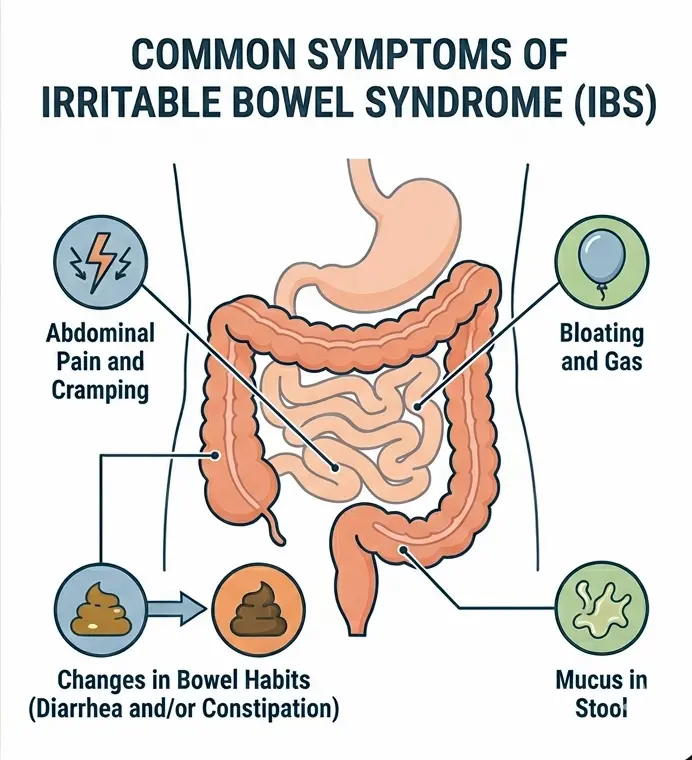
- Abdominal pain or cramping
- Bloating (that “I swallowed a balloon” feeling)
- Diarrhea, constipation, or both
- Gas
- Urgency to use the bathroom
- Relief after a bowel movement
⚠️ IBS Red Flags (Not IBS)
If you see these, don’t assume IBS:
- Blood in stool
- Unexplained weight loss
- Anemia
- Symptoms waking you at night
? These require further evaluation.
What Causes IBS?
No single cause—but several suspects:
- Gut-brain miscommunication
- Stress and anxiety
- Food sensitivities
- Changes in gut bacteria
Think of it like a bad group chat between your brain and your intestines—messages are getting mixed.
Triggers (The Usual Suspects)
- Fatty or fried foods
- Dairy (for some)
- Caffeine
- Alcohol
- Stress
Treatment & Management
There’s no “magic pill,” but plenty of tools:
- Dietary changes (Low FODMAP works well)
- Fiber (carefully—too much can backfire)
- Stress reduction (yes, it matters)
- Medications (for pain, diarrhea, or constipation)
Checklist ✅
✔ Track your symptoms
✔ Identify trigger foods
✔ Stay hydrated
✔ Manage stress
✔ Don’t ignore red flags
✔ Talk to your provider
Summary
IBS is a common but often misunderstood condition that affects gut function. While not dangerous, it can significantly impact daily life. With proper diagnosis and management, most people can control symptoms and live normally.