


🍬 Diabetes: The Sugar That Stalks Us
Written by: Marcos Otero, Retired Physician Associate
Introduction
In Hispanic culture, food is love. From tamales at Christmas to arroz con leche at abuelita’s house, every celebration is wrapped in flavor. But hidden in that sweetness is a bitter truth: Hispanics are almost 70% more likely to be diagnosed with diabetes than non-Hispanic whites. That’s not just a statistic—it’s the cousin at every family reunion we can’t ignore.
Why It Hits Us Harder
- Family history: Diabetes runs in Hispanic families like salsa at a party.
- Diet: Traditional meals are delicious but often heavy in carbs, sugar, and fried foods.
- Lifestyle: Long work hours and little time for exercise add to the risk.
- Access to care: Language, income, and insurance gaps delay diagnosis and treatment.
What Diabetes Looks Like
Diabetes isn’t always obvious. Many people feel fine—until it’s too late. Symptoms include:
- Being thirsty all the time
- Running to the bathroom constantly
- Blurry vision (and no, it’s not just the tequila shots)
- Cuts that heal slowly
- Numbness or tingling in feet and hands
Left untreated, diabetes can lead to heart disease, kidney failure, amputations, and blindness. Not exactly the kind of family inheritance we want.
The Good News: Prevention Works
Here’s where it gets hopeful. Type 2 diabetes—the most common form—can often be prevented or delayed. Small changes = big results.
- Swap sugary drinks for water (yes, even horchata sometimes).
- Take a daily walk, even if it’s just chasing the kids around.
- Control portions—abuelita won’t be offended if you take one tamal instead of three.
- Get your blood sugar checked regularly, especially if diabetes runs in your family.
A Family Affair
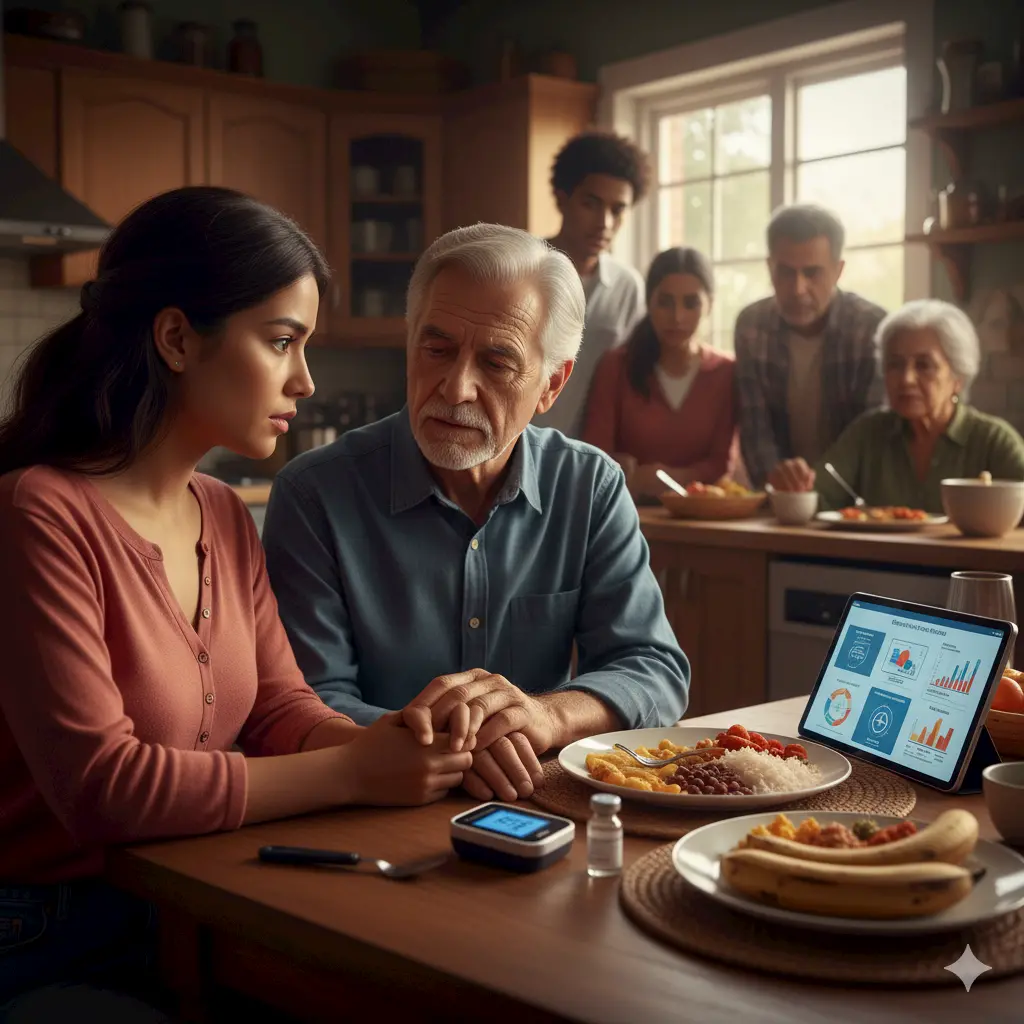
Hispanic culture thrives on family. Use it to your advantage:
- Cook healthier versions of traditional meals together.
- Exercise as a group—family Zumba night, anyone?
- Hold each other accountable. (Tía Lupe will remind you anyway, so why not?)
Closing Thoughts
Diabetes doesn’t have to define our story. By blending culture with healthier habits, we can celebrate the flavors of our heritage without letting sugar write the ending. Because the sweetest gift we can give our families isn’t dessert—it’s a long, healthy life together.