

Leticia’s Reminder — Why Pap Tests Matter
Leticia had a habit of putting herself last. She was the friend who showed up with homemade soup when someone was sick, the mom who worked late and still made it to every school event, the neighbor who always volunteered. But routine checkups? Those stayed at the bottom of her to-do list. She hadn’t had a Pap test in years. “I feel fine,” she told herself. “I’m too busy,” she added. And honestly, she also felt nervous. So she postponed it. Again. And again.
Then one day her doctor gently reminded her that Pap tests aren’t about how you feel today. They’re about preventing problems tomorrow. Something about that sentence stayed with her. So she took a breath, made the appointment, and promised herself she’d show up.
The visit was simple. Uncomfortable? A little. Embarrassing? Only in her head. Painful? Not really. Quick? Absolutely. She walked out relieved that it was over — and proud she finally took care of herself.
A week later, the phone rang. The medical assistant explained calmly that her results showed abnormal cervical cells related to HPV — the human papillomavirus. It wasn’t cervical cancer. But left untreated, those abnormal cells could become cancer over time.
Leticia froze. Her first reaction was fear. Then shame. Then confusion. Her provider reassured her: HPV is extremely common. Most adults are exposed at some point. It doesn’t mean someone “did something wrong.” And in many cases, the body clears it naturally. But sometimes, HPV causes cell changes. That’s exactly why screening matters.
“Pap tests aren’t about today. They’re about protecting your tomorrow.”
Leticia needed a simple outpatient procedure to remove the abnormal cells. No hospital stay. No chemotherapy. No radiation. Just early action — the kind that prevents cancer rather than fights it.
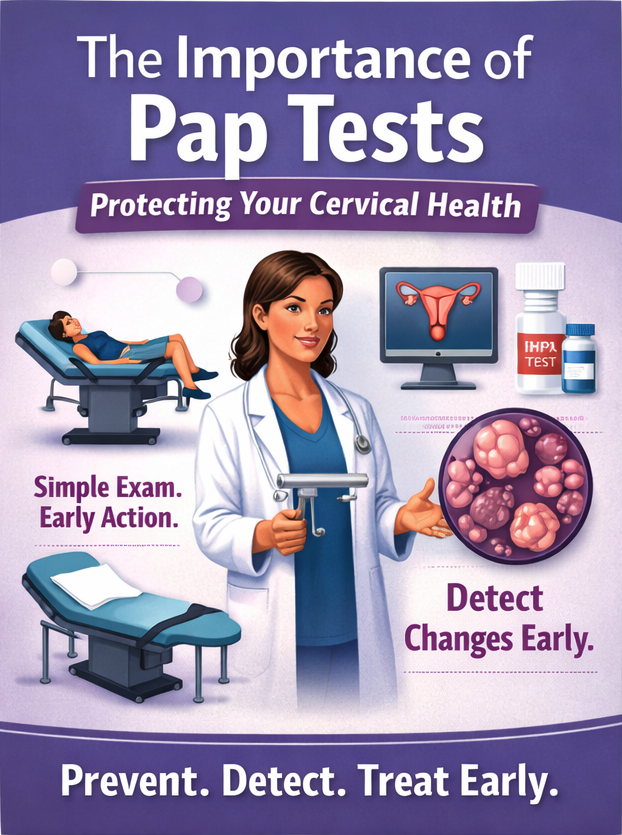
And that’s the key truth: cervical cancer is one of the most preventable cancers when detected early. Screening finds changes long before they become life-threatening. The Pap test and HPV testing work together like smoke detectors — alerting you while the problem is small.
Possible early warning signs of cervical problems include:
• Bleeding after sex
• Bleeding between periods
• Pelvic pain
• Unusual discharge
• No symptoms at all in early stages
Any of these deserve a medical visit — even if they turn out to be harmless.
HPV itself is incredibly common. Most people never know they’ve had it. Some strains cause harmless warts. Others — the “high-risk” types — can cause cervical changes. That’s why screening schedules exist. It isn’t about judgment. It’s about prevention.
For most women, general guidelines recommend Pap testing beginning at age 21. From 30 to 65, Pap and HPV testing together every five years — or Pap alone every three — is typical unless your provider suggests differently. The HPV vaccine, recommended starting in preteens and available for many up to age 26 (sometimes older), prevents the majority of high-risk HPV infections before they ever cause trouble.
“Cervical cancer prevention isn’t scary. Silence is.”
Leticia’s procedure went smoothly. The abnormal cells were removed before they had the chance to progress. She healed. She returned to work. Life continued. But something in her perspective changed. She realized she had been willing to care for everyone else — just not herself. And now she speaks honestly when friends say, “I keep forgetting to schedule my Pap test.”
She answers gently: “I forgot too — until I couldn’t afford to forget anymore.”
There is a stigma around cervical cancer that doesn’t need to exist. HPV is simply a virus — not a moral label. Blame has no place in healthcare. Compassion does.
Protective steps you can take include:
• Routine Pap and HPV screening
• Completing the HPV vaccine series when eligible
• Not smoking
• Practicing safer sex
• Following up on abnormal results — never ignoring them
Sometimes the hardest part is making the appointment. Anxiety tells you to wait. Fear says, “What if something is wrong?” But prevention whispers back, “Then we’ll find it early — when treatment works best.”
Leticia now sets an annual reminder for her checkups, just like birthdays and anniversaries. She also encourages her daughters, nieces, and friends to stay current. Not with pressure — but with love. Because Pap testing is not merely a medical procedure. It is an act of self-respect. It is choosing your health while life is still good.
“Early detection turns fear into relief — and knowledge into power.”
And if you’ve missed a few years? You are not “behind.” You are simply starting today. Doctors and nurses see this every day. What matters most is showing up now.
Leticia’s story has a peaceful ending because her screening worked exactly as intended. It caught a problem when it was small — and quietly removed a future threat. She sometimes thinks about the alternative path she unknowingly avoided. Then she smiles, hugs her kids a little tighter, and thanks herself for finally keeping that appointment.
You deserve the same peace of mind.
Make the call. Keep the appointment. Ask questions. Be brave — even if your voice shakes a little. Your health is worth the time, the discomfort, and the follow-up.
Because your future — your laughter, your hugs, your stories, your holidays, your presence — matters deeply.
To learn more about cervical cancer, HPV, symptoms, screening, and prevention, read our companion article, “Cervical Cancer Awareness — What Every Woman Should Know.” And if you know someone who keeps putting their Pap test off… gently share Leticia’s story. It may be the reminder they need.