

Cervical Cancer Awareness — What Every Woman Should Know
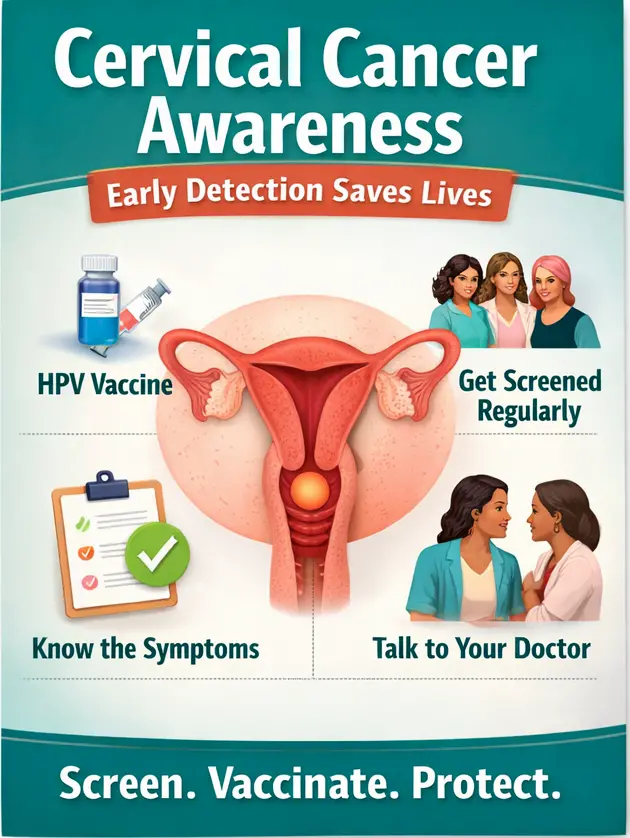
The cervix is the lower, narrow part of the uterus — a small but important gateway between the uterus and the vagina. Cervical cancer develops when abnormal cells in this area begin to grow out of control. The encouraging truth is that cervical cancer is highly preventable and highly treatable when detected early. Screening, vaccination, and awareness save lives — especially for women who may be busy caring for everyone else and forgetting their own appointments.
Most cervical cancer is caused by the human papillomavirus (HPV) — a very common virus transmitted through intimate skin-to-skin contact. Almost everyone who has ever been sexually active will be exposed at some point. Usually, the immune system clears HPV naturally. But sometimes, certain “high-risk” strains stay in the body and cause abnormal cell changes. These changes develop slowly over many years — which is exactly why screening works so well.
“Cervical cancer is one of the most preventable cancers — when screening is up to date.”
Pap tests and HPV testing are designed to detect abnormal cells long before they become cancer. Think of them as early warning systems. You may feel perfectly healthy — and still benefit from screening. That’s why skipping exams for years can quietly increase risk without you realizing it.
General guidelines recommend Pap testing beginning at age 21. Between ages 30 and 65, Pap and HPV testing together every five years — or Pap testing alone every three — is common unless your provider suggests otherwise. Women with certain risk factors may need testing more often. And women over 65 may be able to stop screening if they’ve had consistently normal results. These recommendations can vary by country, so it’s always wise to follow your provider’s advice.
Risk factors for cervical cancer may include:
• Persistent HPV infection
• Smoking
• Weakened immune system
• Missing Pap or HPV screening
• History of abnormal cervical cells
• Early sexual activity or multiple partners
HPV itself is extremely common — but cervical cancer is not — because screening and the HPV vaccine help stop the chain of events that leads to cancer. The vaccine is recommended for preteens, teens, and many adults up to age 26, and sometimes later based on medical advice. It protects against the strains most likely to cause cancer — quietly preventing disease decades before it begins.
“The HPV vaccine prevents cancer. Few medical tools are that powerful.”
Cervical cancer may cause no symptoms at all in its earliest stages. That’s another reason screening is essential — it sees what you cannot feel. As the disease grows, symptoms may include bleeding after sex, bleeding between periods, pelvic pain, unusual discharge, pain during sex, or bleeding after menopause. These symptoms can also have harmless causes — but they should never be ignored.
See your healthcare provider promptly if you notice:
• Bleeding after sex
• Bleeding between cycles
• Pelvic pain
• Pain during sex
• Unusual or watery discharge
• Bleeding after menopause
Early-stage cervical cancer is often treated successfully. Treatment options may include surgery, radiation, chemotherapy, or a combination — depending on stage, age, fertility wishes, and overall health. Early detection offers the best outcomes — and the least invasive treatment.
Equally important is the emotional side of cervical cancer and HPV. Shame and silence prevent people from seeking help — but HPV is simply a virus. It is not a character judgment, and it does not define anyone. Compassion and education remove barriers far better than fear ever could.
“HPV is common. Shame should not be.”
Many women skip Pap tests because of embarrassment, discomfort, past trauma, lack of insurance, cultural stigma, or fear of results. Healthcare systems must acknowledge these realities with sensitivity and respect. Patients deserve privacy, kindness, and clear explanation — always.
If you’ve missed screening for years, the most important day is the one you return. Doctors see this every day. You are not “late.” You are simply restarting prevention — and prevention always matters.
Simple steps to protect your cervical health:
• Stay current with Pap and HPV testing
• Get the HPV vaccine if eligible
• Avoid smoking
• Practice safer sex
• Follow up on abnormal results
• Ask questions — knowledge is power
Partners, families, and communities also play a role. Supporting women — emotionally, culturally, and practically — helps them stay engaged in care. Offering rides, childcare help, and encouragement makes a difference.
Access matters too. Community clinics, health departments, and nonprofit programs often provide low-cost or free screening for those without insurance. No woman should miss lifesaving prevention simply because care is unaffordable.
“Screening is not about fear. It’s about peace of mind — and a healthy future.”
Cervical cancer awareness is ultimately about empowerment. When women understand their bodies, their risks, and their options, they can make informed choices. Knowledge reduces fear. Early detection reduces harm. Vaccination prevents disease entirely.
If you’ve been delaying your exam, consider this your gentle reminder — not a lecture, but a caring nudge. Put yourself on your own priority list. Schedule the appointment. Ask your provider which tests you need and when. Encourage your daughters, sisters, mothers, friends, and neighbors to do the same.
Your life matters. Your health matters. And prevention — simple, available, proven — is one of the greatest gifts you can give yourself.
To see how early screening works in real life, read our companion story, “Leticia’s Reminder — Why Pap Tests Matter,” and share these resources with someone you love. Awareness saves lives — quietly, powerfully, every single day.
.